

by guest writer: Phillip Miner
Poliwag, Pokemon Red/Blue/Green, Pokemon.com , September 28, 1998,
Poliwag, Poliwrath and Politoed

Poliwrath, Pokémon Red/Blue/Green, Pokémon.com , September 28, 1998,
Previously, we’ve talked about the ninja frog Pokémon known as Greninja here on the Frog Blog. However, it’s not the only kind of frog Pokémon that exists. The developers of Pokémon have so far created over 1000 species of Pokémon; of those, there are six frog evolutionary lines, with Greninja and its prior evolutions (Froakie and Frogadier) being one of them. This brings the total number of frog Pokemon to 17. (I was honestly hoping for more, considering there’s over 1000 species of Pokemon and nearly 8000 species of frogs now.)
For this entry, we’re going to be talking about one of the original frog lines in Pokémon: the Poliwrath/Politoed line that dates all the way back to the very first Pokémon games ever, Pokémon Red and Blue (or Red and Green in Japan).
The evolutionary line starting from Poliwag obviously isn’t as famous as the Greninja line today (and is much older), but it nonetheless has a fascinating backstory of its own. The current President of Pokémon developers Game Freak, Satoshi Tajiri, has noted that the Poliwag line is among his favorites that he personally designed.
The design of the Poliwag line is primarily inspired by Tajiri’s childhood experiences with frogs. When Tajiri was young, he was particularly fascinated by a specific phenomenon he found with tadpoles at a local pond: their translucent abdomens, revealing the intestines inside. He noted how, as the tadpoles ate, their spiraled intestines would visibly contract to move the food through their bodies. This is why on the Poliwag line, their abdomens display a spiral pattern so prominently.
Poliwag can evolve, via the intermediate stage of Poliwhirl, into one of two final forms once the conditions are met: either the classic fighting-type Poliwrath, or the distinctive green Politoed. Even though they both come from the humble Poliwag, their types are different from each other, so they require different strategies when playing them. Check out the full “Poli” evolutionary line on the official Pokémon website here .

Politoed, Pokémon Gold/Silver, Pokémon.com , November 21, 1999,
Some Frogs of Japan
Although Tajiri doesn’t specify which frogs he observed in his childhood years, the ones he likely encountered were local pond frogs. More specifically, two species of frogs commonly found in ponds across Japan would be the Daruma pond frog and the black-spotted pond frog.
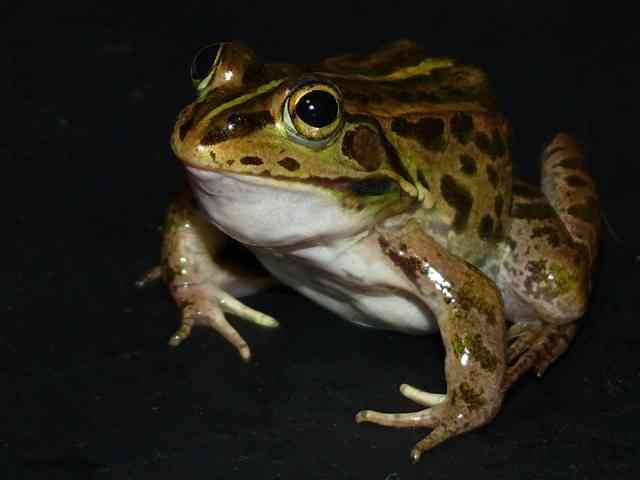
Daruma Pond Frog, Tochigi Prefecture, central Japan, Wikipedia , March 13, 2010, Photo credit: Koolah .
The Tokyo Daruma pond frog is not considered endangered worldwide, but in Japan it is often considered Near Threatened (NT) because of habitat loss, especially loss of rice-paddy wetlands.
The Nagoya Daruma pond frog is much more concerning, and is considered endangered by many Japanese sources with some local forms in severe decline, again related to rice field and drainage modernization.
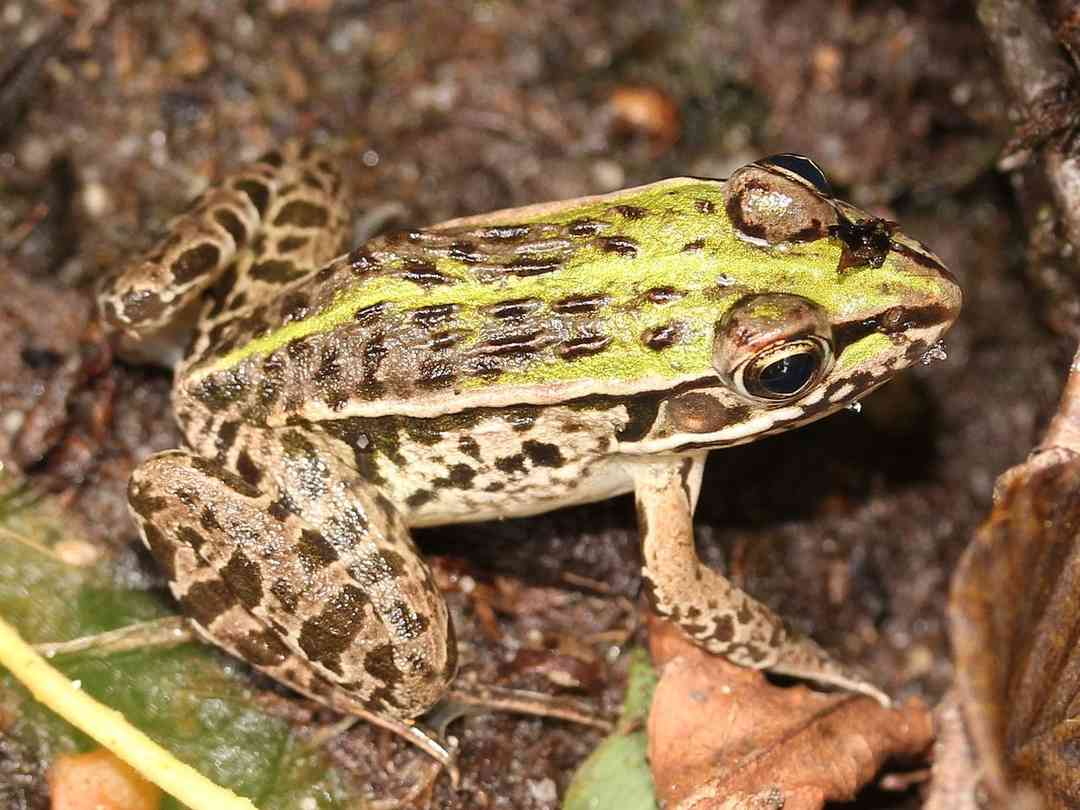
Black-spotted Pond Frog, Japan (specific location not listed). Wikipedia, July 18, 2013. Photo credit: Alpsdake .
The Black-spotted pond frog (the larger green frog with black spots often seen in East Asia) is generally not globally endangered and has a wider distribution in Japan, Korea, China, and surrounding areas. However, in Japan it can create conservation issues because it hybridizes with Daruma frogs.
If you don’t appreciate these particular frogs yet, you will when you hear this next fact: both species prey on insects, including the infamous “murder hornets,” also called Northern giant hornets, which have gained attention in recent years. These Japanese amphibians are generalist predators and share an extraordinary ability to prey upon venomous insects and appear able to tolerate occasional stings without severe effects.. Any animal that reduces the numbers of those giant hornets is a friend of ours indeed.
The Black-spotted Pond Frog is more likely to be represented by Poliwrath, because it appears to have a relatively high tolerance for venom and painful stings, calmly eating aggressive insects like the Northern giant hornet with little visible reaction.
Saving the Inspirations of Pokémon

Photo of Satoshi Tajiri, Game Freak’s Facebook page , February 25, 2016.
There is a very good reason we here at A Frog House are so keen on the frog connection to Pokémon. It is because the real-world frogs that inspired Pokémon such as Poliwrath and Politoed are themselves under threat. This is a phenomenon that Satoshi Tajiri himself has noticed growing up. According to Wikipedia, with gaming website IGN as their source:
“As urban areas of Japan spread and more land was paved over, habitats for hunting bugs [and frogs] were lost. Tajiri wanted his games to allow children to have the feeling of catching and collecting creatures as he had.”
What Threatens Frogs?
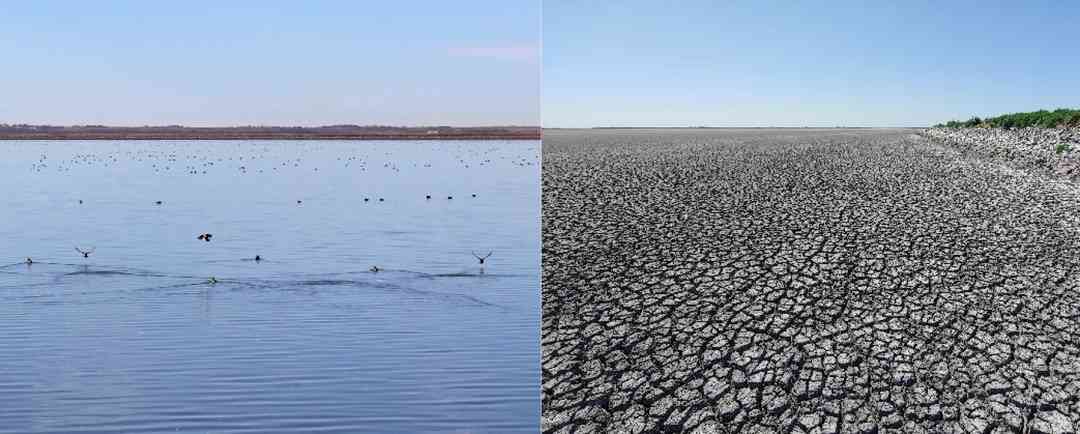
Habitat loss, invasive species and disease, pollution, climate change, and overexploitation are all threats that every frog species (and all forms of life) potentially deals with today. Taken together, these factors that endanger all frogs have put approximately one-third of all frog species at risk of extinction. Some threatened species may be ones we haven’t yet discovered.
An easy way to remember life threats is to use the acronym HIPCO.
1. Habitat Loss and Fragmentation (H): Agriculture, urban expansion, and deforestation directly destroy both the aquatic and terrestrial environments frogs need to complete their life cycles, while also isolating populations and thereby restricting breeding, migration and foraging.
2. Invasive Species and Disease (I): Introduced species outcompete native wildlife, alter food webs, and introduce foreign diseases. One of the worst is the chytrid fungus ( Batrachochytrium dendrobatidis ), a devastating pathogen that has wiped out or severely depleted hundreds of amphibian populations globally. Introduced predatory fish, invasive bullfrogs, and pathogens continue to disrupt local ecosystems.
3. Pollution and Chemicals (P): Because frogs breathe and absorb water through their highly permeable skin, they are exceptionally sensitive to water contamination, pesticides, industrial runoff, and acid rain. These cause lethal and sublethal effects such as deformities, reproductive failure, and compromised immune systems. Toxic pollutants concentrate up the food chain, causing even more damage in higher forms of life.
4. Climate Change (C): Shifting temperature and weather patterns alter or dry out the temporary wetlands and ponds that frogs use to breed. Climate change causes geographic shifts in habitable zones (for example, some frogs have to climb higher and higher to stay cool enough until they run out of options for ascent). The phenomenon increases vulnerability to disease, and mismatches seasonal breeding cues.
5. Overexploitation (O): Frogs are heavily harvested from the wild for the international pet trade, medical research, and human consumption (e.g., frog legs). This practice decimates local populations and drives rare species closer to extinction.
Hopefully this information has helped show just how much trouble frogs are in today. But awareness is only the first step. An equally important question remains: what can you do about it?
How to SAVE THE FROGS!
In order to protect the frogs and other species that could be under threat from reckless human development, a variety of actions can be taken. Reducing pollution, advocating for responsible land usage, and protecting our sources of water all help, and any action taken towards these causes are great ways of showing support. You can start by consulting our guide on saving the frogs at Tangible Ways To Help The Frogs.
International Day for Biological Diversity

We are losing our biodiversity too fast. Here are just three examples.
The vaquita (the world’s smallest porpoise, found exclusively in the northern Gulf of California in Mexico) has 10 or fewer individuals in the wild.
When A Frog House founder Margot Fass was born 86 years ago, there were roughly one to two million chimpanzees, or about 1,500–2,000 human beings for every chimpanzee. Now the ratio is approximately 20,000 human beings (exponentially increasing) to 1 chimpanzee (rapidly decreasing).
It is estimated that in 1940 there were several trillion frogs, or about 1 human to about 1,000 frogs. Today a rough estimate is something closer to 1 human to 60–120 frogs.
(These figures are broad estimates intended to illustrate trends rather than exact population counts.)
The irony for us frogaphiles is that despite frogs still outnumbering us, many amphibian populations are collapsing. This makes Margot Fass very mad indeed.
Large global populations can conceal local disappearances.
International Day For Biodiversity is celebrated annually on May 22 to raise awareness about global ecosystems and life on Earth. The 2026 theme is “ Acting locally for global impact, “ focusing on community-driven actions to help achieve the Kunming-Montreal Global Biodiversity Framework goals (KMGBF).
The theme is perfect, because as mentioned before, frog populations can appear fine on a broad scale, but locally tell a completely different story. Have you missed hearing spring peepers and other lovely frog sounds these past years?
Please Help
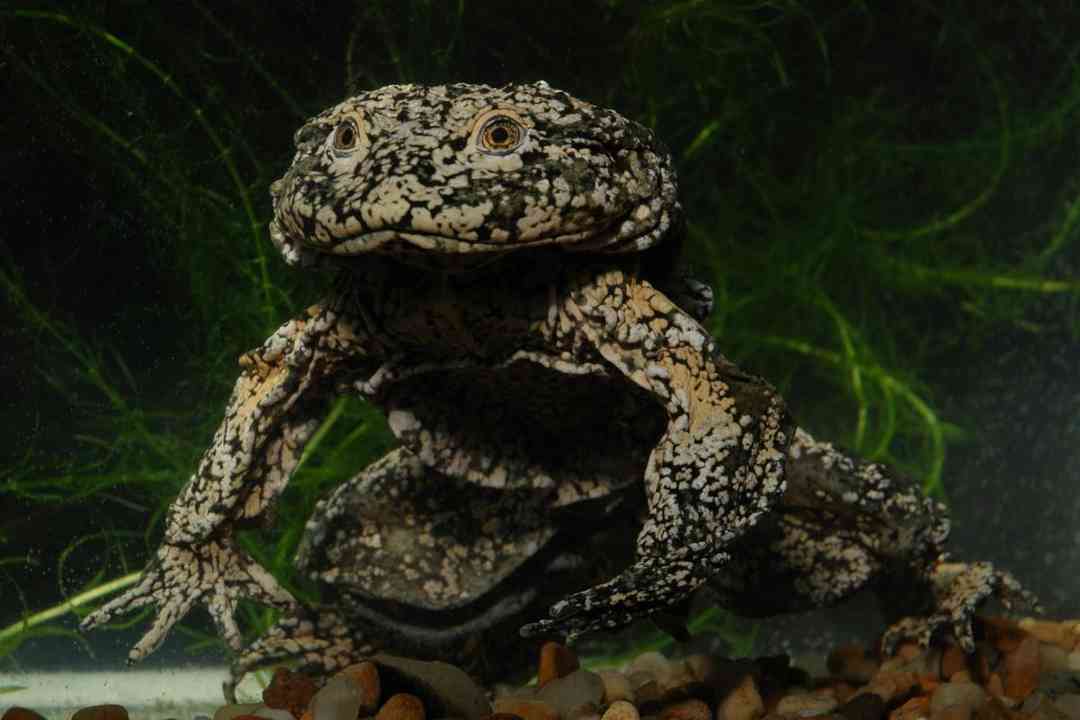
What would would we do without this masterpiece of nature? Listen to this song and weep.
Using this link , document your efforts on any social media with the hashtags of #BiodiversityDay, #LocalAction, and #KMGBF. We would love for you to share the serious things you do for frogs with us at team@AFrogHouse.org.
We don’t want to deprive future generations of the real world inspirations that have created such a beloved franchise like Pokémon! Take action now to make sure our children can experience the same joy that Tajiri had growing up.
